
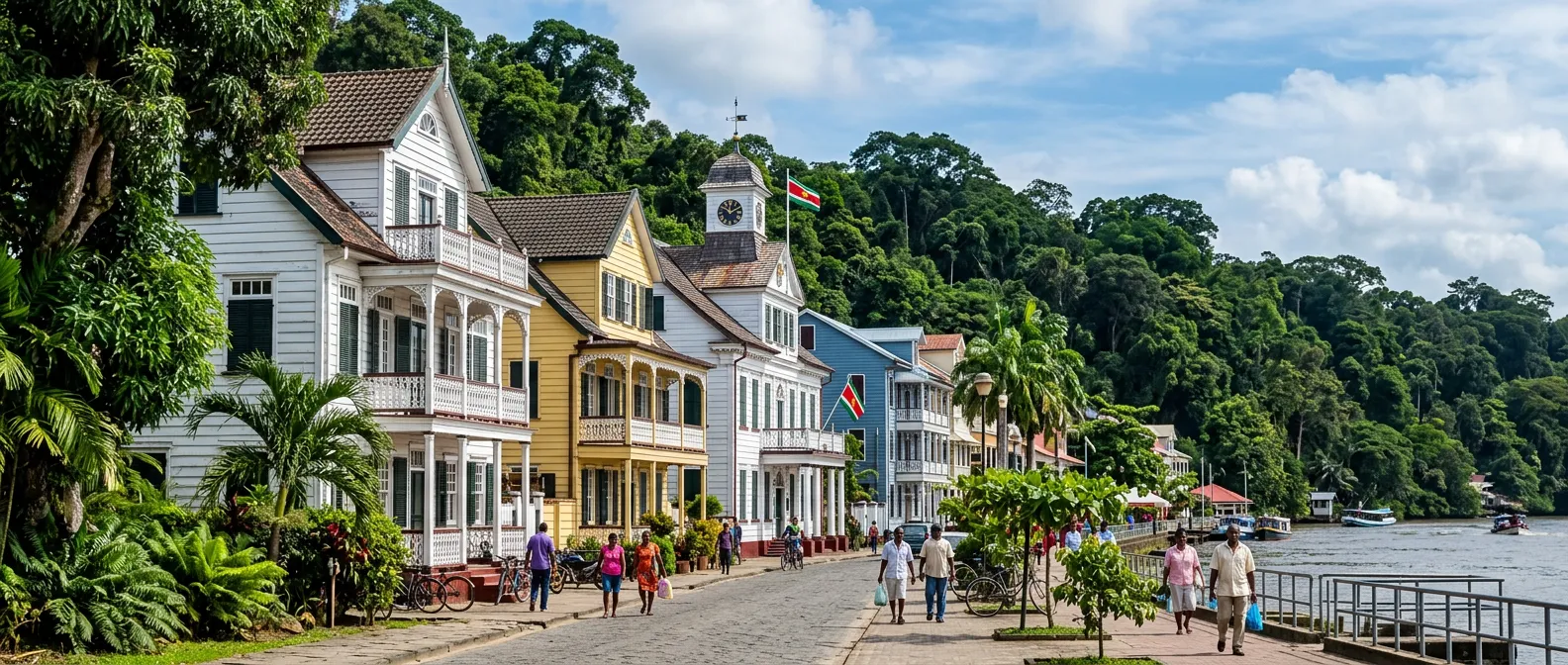
Travel insurance is not legally required to enter Suriname, but it is strongly recommended for every visitor. Suriname’s limited medical infrastructure, remote jungle destinations, and the high cost of emergency medical evacuation make insurance a practical necessity. This guide explains what coverage you need, how much it costs, and how to choose the right policy for your Suriname trip.
For a complete overview of all entry requirements, see our Suriname eVisa guide.
Is Travel Insurance Required for Suriname?
No, Suriname does not require travel insurance as a condition of entry. Unlike some countries that mandate proof of insurance at immigration, Suriname’s entry requirements focus on a valid passport (with at least 6 months validity), the appropriate visa or eTourist Card, and a yellow fever vaccination certificate if arriving from a risk country.
However, the absence of a legal requirement does not mean you should skip it. The Suriname government and most foreign affairs departments strongly advise all travelers to carry comprehensive travel insurance. Medical facilities outside Paramaribo are extremely limited, and serious injuries or illnesses in Suriname’s interior often require air evacuation to another country.
| Requirement | Status |
|---|---|
| Travel insurance mandatory? | No |
| Travel insurance recommended? | Strongly |
| Checked at immigration? | No |
| Required for visa application? | No |
| Required by most tour operators? | Yes |
If you are still in the process of applying for your visa, review the full list of Suriname visa requirements to ensure you have everything in order.
Why You Need Travel Insurance for Suriname
Suriname is a stunning destination – over 90% of the country is covered by tropical rainforest, and attractions like the Central Suriname Nature Reserve (a UNESCO World Heritage Site), Brownsberg Nature Park, and the Upper Suriname River region draw adventure travelers from around the world. But this beauty comes with practical risks.
Limited Medical Infrastructure
Suriname’s healthcare system is concentrated in Paramaribo, the capital city. The Academic Hospital Paramaribo (AZP) is the main public hospital, and there are a few private clinics in the city. Outside the capital, medical facilities are sparse or nonexistent. If you are trekking in the interior or visiting Maroon and Indigenous communities along the rivers, the nearest hospital could be hours away by boat or small aircraft.
Expensive Medical Evacuation
If you suffer a serious injury or illness in Suriname’s interior, you may need to be evacuated by air to Trinidad and Tobago, Curaçao, or even Miami for advanced treatment. A medical evacuation flight can cost between USD 50,000 and USD 100,000 or more, depending on the destination and medical equipment required. Without insurance, this cost falls entirely on you.
Adventure Activity Risks
Many visitors to Suriname engage in activities that carry inherent risk: jungle trekking, river kayaking, piranha fishing, canopy tours, and 4×4 expeditions on unpaved roads. Standard travel insurance policies may not cover injuries sustained during these activities unless you add an adventure sports rider.
What Your Suriname Travel Insurance Should Cover
A good travel insurance policy for Suriname should include the following coverage areas:
Emergency Medical Expenses
Your policy should cover at least USD 100,000 in emergency medical expenses. This includes hospital stays, surgery, doctor visits, prescription medication, and diagnostic tests. Make sure the policy covers treatment in Suriname specifically – some policies exclude certain countries.
Emergency Medical Evacuation
This is arguably the most important coverage for Suriname travel. Look for a policy that covers at least USD 250,000 in evacuation costs, including air ambulance to the nearest adequate medical facility. Confirm that the policy covers evacuation from remote areas, not just from major cities.
Trip Cancellation and Interruption
If you need to cancel or cut short your trip due to illness, injury, family emergency, or other covered reasons, this coverage reimburses non-refundable expenses like flights, hotel bookings, and visa fees.
Baggage and Personal Effects
Covers loss, theft, or damage to your luggage and personal belongings. This is particularly useful in Suriname, where domestic travel often involves small boats and bush planes with limited cargo security.
Personal Liability
Covers legal costs if you accidentally injure someone or damage property during your trip.
Adventure Activities
If you plan to explore Suriname’s interior, ensure your policy includes coverage for:
– Jungle trekking and hiking
– Kayaking and canoeing
– Wildlife tours
– 4×4 off-road driving
– Canopy and zip-line tours
Standard policies often exclude these activities. You may need to purchase an adventure sports upgrade or choose a provider that includes them automatically.
How Much Does Suriname Travel Insurance Cost?
The cost of travel insurance depends on your age, trip duration, coverage level, and chosen provider. Here are typical price ranges for a standard policy:
| Traveler Profile | Trip Duration | Estimated Cost (USD) |
|---|---|---|
| Solo traveler (age 25-40) | 2 weeks | $30 – $60 |
| Solo traveler (age 25-40) | 1 month | $50 – $90 |
| Couple (age 30-45) | 2 weeks | $55 – $110 |
| Family (2 adults + 2 children) | 2 weeks | $80 – $160 |
| Solo traveler (age 60+) | 2 weeks | $60 – $120 |
These prices assume a standard policy with USD 100,000+ medical coverage and USD 250,000+ evacuation coverage. Adding adventure sports coverage typically increases the premium by 10-25%.
Compared to the potential cost of a medical evacuation (USD 50,000+) or an uninsured hospital stay, travel insurance represents excellent value.
How to Buy Travel Insurance for Suriname
Follow these steps to get the right coverage:
Step 1: Assess Your Needs
Consider your planned activities, trip duration, health conditions, and the value of your pre-booked expenses. If you are visiting Suriname’s interior, adventure coverage is essential. If you have pre-existing medical conditions, look for a policy that covers them or offers a waiver.
Step 2: Compare Providers
Use comparison sites like InsureMyTrip, Squaremouth, or World Nomads to compare policies. Filter for Suriname as your destination and check that the policy covers all planned activities. Read the policy wording carefully – especially exclusions.
Step 3: Check Coverage Limits
Ensure the policy meets these minimum thresholds:
– Medical expenses: USD 100,000+
– Medical evacuation: USD 250,000+
– Trip cancellation: Equal to your total pre-paid trip cost
– Baggage: USD 1,000+
Step 4: Purchase Before You Travel
Buy your policy as soon as you book your trip. Trip cancellation coverage only applies to expenses incurred after the policy purchase date. Waiting until the last minute leaves you unprotected if something goes wrong before departure.
Step 5: Save Your Policy Documents
Print a copy of your policy and carry it with you. Also save a digital copy on your phone and email one to a trusted contact at home. Note the 24/7 emergency assistance number – you will need it if you have a medical emergency in Suriname.
Medical Care in Suriname: What to Know
Understanding Suriname’s healthcare landscape helps you prepare for emergencies:
Hospitals in Paramaribo
- Academic Hospital Paramaribo (AZP): The main public hospital, located in the capital. Handles most emergencies and serious cases. Equipment and standards vary.
- Private clinics: Several private medical clinics operate in Paramaribo, offering shorter wait times and English-speaking staff. Costs are payable in USD or SRD.
Pharmacies
Pharmacies (apotheek) are available in Paramaribo and larger towns. Common medications are available, but specific brands may not be. Bring any prescription medications you need from home, along with a copy of the prescription.
Emergency Numbers
| Service | Number |
|---|---|
| Police | 115 |
| Fire | 110 |
| Ambulance | 113 |
| General emergency | 112 |
Response times outside Paramaribo can be very slow. In remote areas, you may need to arrange your own transport to the nearest medical facility.
Health Risks
Suriname is in a tropical climate zone. Take precautions against:
– Mosquito-borne illnesses: Dengue fever, malaria (in the interior), and Zika virus. Use insect repellent and wear long sleeves.
– Yellow fever: Vaccination required if arriving from a risk country.
– Water quality: Drink bottled or purified water outside Paramaribo.
– Sun exposure: Tropical sun is intense. Use sunscreen and stay hydrated.
Adventure Activities and Insurance Coverage
Suriname’s interior is its biggest draw for many travelers, but it also presents the biggest insurance challenge. Here is what you need to know:
Jungle Trekking
Guided treks through the Central Suriname Nature Reserve and Brownsberg Nature Park involve uneven terrain, tropical heat, and wildlife encounters. Most standard policies cover hiking, but multi-day jungle expeditions may require adventure coverage.
River Tours and Kayaking
The Suriname, Marowijne, and Coppename rivers offer boat tours and kayaking. These are generally covered under standard water sports provisions, but confirm with your provider.
Canopy Tours and Zip Lines
Available at several eco-lodges. Usually covered under adventure sports riders.
4×4 and Off-Road Driving
Self-driving on unpaved roads to reach interior destinations carries risk of accidents and vehicle damage. Check whether your policy covers self-drive activities on unsealed roads.
Tip: If you book a tour through a licensed Suriname tour operator, ask whether they carry their own liability insurance. Many do, but coverage levels vary.
Common Mistakes to Avoid
- Assuming your credit card provides enough coverage. Credit card travel insurance typically has low limits and excludes many activities. It is not a substitute for a dedicated policy.
- Not checking adventure activity exclusions. If you plan to explore Suriname’s interior, verify that your policy covers jungle trekking, river activities, and off-road driving.
- Waiting too long to buy insurance. Purchase your policy as soon as you book your trip to maximize trip cancellation protection.
- Forgetting to declare pre-existing conditions. Undisclosed conditions can void your entire policy. Declare everything upfront.
- Not carrying proof of insurance. Keep a printed copy and a digital copy accessible at all times.
- Choosing the cheapest policy. The lowest premium often means the lowest coverage limits and the most exclusions. Read the fine print.
- Ignoring the evacuation coverage limit. Medical evacuation from Suriname can easily exceed USD 50,000. Make sure your policy limit is sufficient.
Frequently Asked Questions
Is travel insurance mandatory for Suriname?
No, Suriname does not require travel insurance for entry. However, it is strongly recommended due to limited medical facilities and the high cost of emergency evacuation from the country.
Does my health insurance from home cover me in Suriname?
Most domestic health insurance plans do not provide coverage abroad, or they offer very limited international coverage. Check with your provider before assuming you are covered. A dedicated travel insurance policy is almost always necessary.
How much does travel insurance for Suriname cost?
For a typical 2-week trip, expect to pay between USD 30 and USD 80 for a standard policy. Costs increase with age, trip duration, and optional coverage like adventure sports or pre-existing condition waivers.
What happens if I need medical evacuation from Suriname?
Your insurance provider coordinates evacuation through their emergency assistance network. This may involve air ambulance to Trinidad, Curaçao, or Miami. Without insurance, you would need to pay USD 50,000 to USD 100,000+ out of pocket.
Do I need adventure sports coverage for Suriname?
If you plan to trek in the jungle, kayak on rivers, or participate in canopy tours, yes. Standard policies often exclude these activities. An adventure sports rider adds 10-25% to your premium but provides essential protection.
Can I buy travel insurance after arriving in Suriname?
Some providers allow post-departure purchases, but coverage may be limited and there is usually a waiting period (48-72 hours) before benefits take effect. It is always better to buy before you travel.
Does travel insurance cover trip cancellation for Suriname visa denial?
Most policies cover trip cancellation for unforeseen events, but visa denial is not always included. Check your policy wording. If you are concerned about visa issues, review the Suriname visa application process carefully before booking.
What should I do if I have a medical emergency in Suriname?
Call your insurance provider’s 24/7 emergency assistance number immediately. They will direct you to the nearest appropriate facility and coordinate payment. If you cannot call, have someone call on your behalf or go directly to the Academic Hospital Paramaribo.
Key Takeaways
- Travel insurance is not legally required for Suriname, but it is strongly recommended for every visitor.
- Medical facilities outside Paramaribo are extremely limited, and evacuation costs can exceed USD 50,000.
- Ensure your policy covers at least USD 100,000 in medical expenses and USD 250,000 in evacuation.
- If you plan to explore Suriname’s interior, add adventure sports coverage to your policy.
- Buy your policy as soon as you book your trip to maximize trip cancellation protection.
- Always carry proof of insurance – both printed and digital copies – and note the 24/7 emergency assistance number.
- For complete travel planning, see our guides on Suriname visa fees, tourist visas, and visa-free countries.