
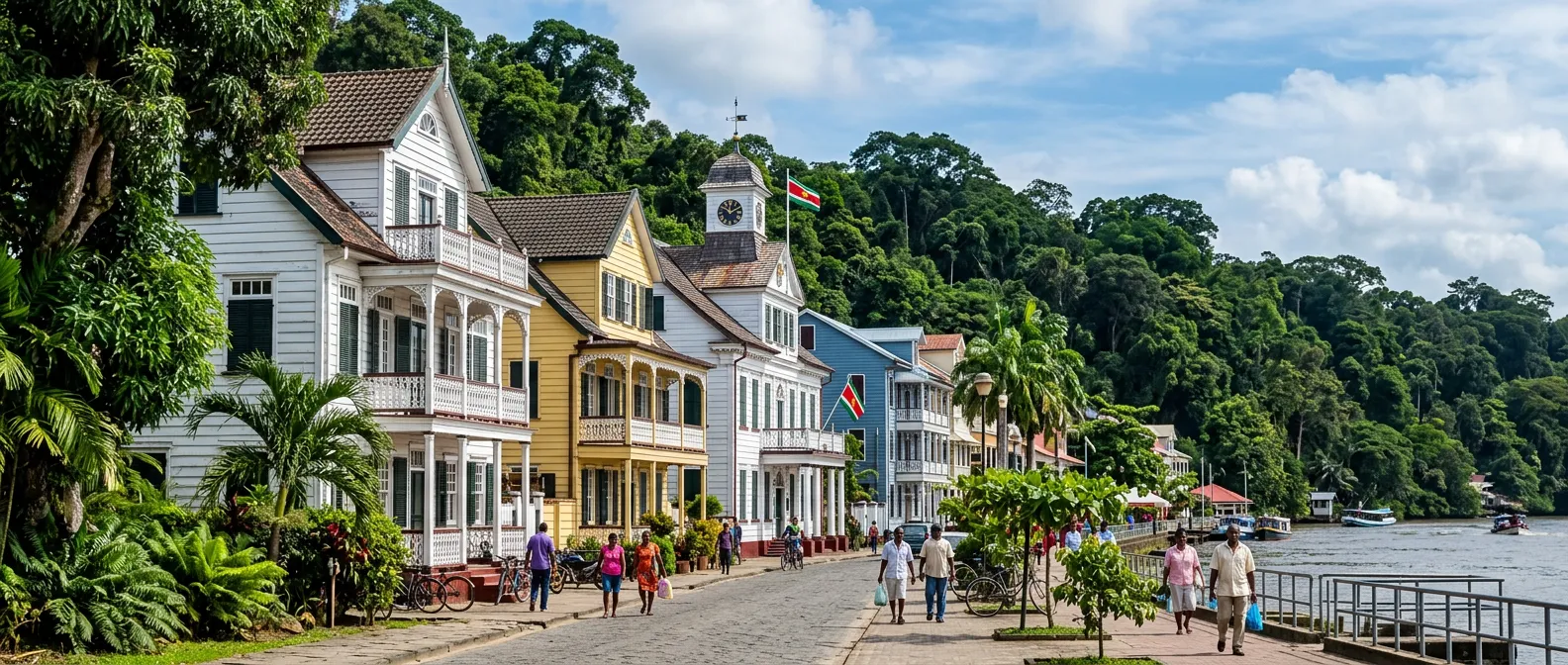
Passing through Suriname on your way to another country? Whether you have a short layover at Johan Adolf Pengel International Airport or a longer connection in Paramaribo, you may need a transit visa depending on your nationality. This guide explains exactly who needs a Suriname transit visa, how to apply, what it costs, and the key differences between airside and landside transit.
What Is a Suriname Transit Visa?
A Suriname transit visa is a short-stay authorization that allows foreign nationals to pass through Suriname en route to a third country. It is not the same as a tourist visa or eVisa – a transit visa is specifically designed for travelers who are not staying in Suriname as their final destination.
The transit visa permits you to enter Suriname for the purpose of catching a connecting flight, boarding a cruise, or continuing overland to another country. It is typically valid for a very short period – usually 24 to 72 hours – and does not allow you to engage in tourism, business activities, or employment.
Key characteristics of the Suriname transit visa:
- It is destination-specific – you must have a confirmed onward ticket
- It is time-limited – valid only for the duration of your transit
- It is purpose-limited – you cannot use it for tourism or business
- It is not required for everyone – many nationalities are exempt
If you plan to stay in Suriname for more than a few days or wish to explore the country, you should apply for a Suriname eVisa or tourist visa instead.
Do You Need a Transit Visa for Suriname?
Whether you need a transit visa depends on three factors: your nationality, how long you will be in Suriname, and whether you leave the airport transit zone.
You Do NOT Need a Transit Visa If:
- You are a citizen of a visa-free country – see the full list of Suriname visa-free countries
- You hold a valid Suriname eVisa – the eVisa covers transit as well as tourism
- You are a CARICOM national – citizens of Caribbean Community member states enjoy visa-free access to Suriname
- You are transiting airside (remaining in the airport transit zone) and your nationality qualifies for airside transit exemption
You DO Need a Transit Visa If:
- Your nationality requires a visa to enter Suriname
- You do not hold a valid eVisa or visa
- You need to leave the airport during your transit (landside transit)
- Your connecting flight is on a different ticket and you need to collect and re-check luggage
- Your layover exceeds the permitted visa-free or airside transit period
Quick Decision Guide
| Your Situation | What You Need |
|---|---|
| Visa-free national, staying in airport | Nothing – proceed to connecting flight |
| Visa-free national, leaving airport | Nothing – visa-free entry covers short stay |
| eVisa holder, any transit | Valid eVisa covers transit |
| Non-visa-free national, airside transit | May need transit visa (check nationality) |
| Non-visa-free national, leaving airport | Transit visa or eVisa required |
| CARICOM national | No visa needed |
If you are unsure whether your nationality requires a visa, consult the Suriname eVisa requirements page or contact the nearest Suriname embassy.
Suriname Transit Visa Requirements
To apply for a Suriname transit visa, you must provide the following documents:
Required Documents
- Valid passport – with at least 6 months validity remaining from your date of entry and at least 2 blank pages
- Completed application form – filled out accurately with your travel details
- Passport-sized photographs – 2 recent photos (35mm x 45mm) with a white background
- Confirmed onward ticket – showing your departure from Suriname within the transit period
- Valid visa for your destination – if your final country requires a visa, you must hold it before applying
- Proof of sufficient funds – bank statements or cash showing you can cover expenses during transit
- Travel itinerary – including flight numbers, dates, and times for both arrival and departure
Additional Documents (If Applicable)
- Hotel reservation – if your transit requires an overnight stay in Suriname
- Letter of invitation – if staying with a host in Suriname during transit
- Travel insurance – covering the transit period (recommended but not always mandatory)
All documents must be in English, Dutch, or Spanish. Documents in other languages must be translated by a certified translator.
How to Apply for a Suriname Transit Visa
There are two ways to apply for a Suriname transit visa: online or through an embassy.
Option 1: Online Application (Recommended)
The fastest way to obtain a Suriname transit visa is through the official Suriname eVisa portal:
- Visit the official eVisa application website
- Select “Transit Visa” as your visa type
- Fill in your personal details, passport information, and travel dates
- Upload the required documents (passport scan, photo, onward ticket)
- Pay the visa fee online using a credit or debit card
- Submit your application
- Receive your approved transit visa via email (typically within 3-5 business days)
Option 2: Embassy or Consulate Application
If you prefer to apply in person or cannot apply online:
- Contact the nearest Suriname embassy or consulate
- Obtain and complete the transit visa application form
- Gather all required documents
- Submit your application in person or by mail
- Pay the applicable fee
- Wait for processing (5-10 business days)
- Collect your passport with the transit visa stamp
Tip: Apply at least 2-3 weeks before your travel date to allow for processing time and any unexpected delays. The online process is generally faster and more convenient than embassy applications.
Suriname Transit Visa Fees
The transit visa is less expensive than a standard tourist eVisa. Fees vary depending on your nationality and application method:
| Fee Type | Amount (SRD) | Amount (USD approx.) |
|---|---|---|
| Transit Visa (online) | SRD 150 – 250 | $4 – $8 |
| Transit Visa (embassy) | SRD 200 – 350 | $6 – $11 |
| Express processing (online) | SRD 300 – 500 | $9 – $15 |
| Service/processing fee | SRD 50 – 100 | $2 – $3 |
Note: Fees are payable in Surinamese Dollars (SRD) or USD equivalent. Online payments accept major credit and debit cards. Embassy payments may require cash or bank transfer depending on the specific mission.
Compared to the standard Suriname eVisa fee of approximately $54 USD for tourist entry, the transit visa offers a more affordable option for travelers who are only passing through.
Airside vs Landside Transit in Suriname
Understanding the difference between airside and landside transit is essential for determining whether you need a visa.
Airside Transit
Airside transit means you remain within the airport’s international transit area without passing through immigration. You do not collect your luggage, do not go through passport control, and do not leave the secure zone.
For airside transit at Johan Adolf Pengel International Airport (PBM):
- Some nationalities can transit airside without a visa
- You must hold a confirmed onward boarding pass
- Your layover must be within the permitted transit time (typically under 24 hours)
- You cannot change terminals or leave the transit area
Important: PBM is a relatively small airport with limited transit facilities. There are no dedicated transit lounges for long layovers. If your layover exceeds a few hours, you may find the transit area uncomfortable.
Landside Transit
Landside transit means you pass through immigration and enter Suriname, even if briefly. This applies when:
- You need to collect and re-check luggage (different airline or ticket)
- You have an overnight layover and need to stay at a hotel
- You want to leave the airport during your connection
- Your connecting flight departs from a different terminal requiring re-entry
For landside transit, you must have a valid visa, eVisa, or be from a visa-free country. A transit visa is the minimum requirement for nationals who need authorization to enter Suriname.
Comparison: Airside vs Landside
| Factor | Airside Transit | Landside Transit |
|---|---|---|
| Leave airport | No | Yes |
| Pass immigration | No | Yes |
| Collect luggage | No | Yes (if needed) |
| Visa required | Depends on nationality | Yes (unless exempt) |
| Maximum stay | Usually under 24 hours | Up to 72 hours |
| Hotel access | No | Yes |
Transit Through Johan Adolf Pengel International Airport
Johan Adolf Pengel International Airport (IATA: PBM), located in Zanderij approximately 45 km south of Paramaribo, is Suriname’s main international airport and the primary transit point for travelers passing through the country.
What to Expect During Transit
- Connection times: Most connections at PBM involve same-day flights. Layovers of 4-8 hours are common for regional connections.
- Airlines: Suriname Airways (SLM) is the primary carrier, with connections to Miami, Amsterdam, Curaçao, Aruba, and regional Caribbean destinations.
- Facilities: The airport has basic amenities including a small duty-free shop, restaurant, and currency exchange. Wi-Fi is available but may be limited.
- Transportation to Paramaribo: If you have a long layover and a valid visa, taxis and shuttle buses connect the airport to Paramaribo (approximately 1-hour drive).
Tips for Smooth Transit
- Book on the same ticket when possible – this simplifies baggage transfer and reduces the chance of needing to pass through immigration
- Check your airline’s policy – some airlines require a transit visa even for airside connections
- Allow extra time – PBM is a smaller airport and processes can be slower than major international hubs
- Keep documents accessible – have your passport, onward ticket, and visa (if applicable) readily available
Frequently Asked Questions
How long can I stay in Suriname on a transit visa?
A Suriname transit visa is typically valid for 24 to 72 hours. The exact duration depends on your nationality and the specific conditions of your visa. You must depart Suriname before the transit visa expires. If you need to stay longer, you should apply for a tourist eVisa instead.
Can I leave the airport during a transit in Suriname?
Yes, but only if you have the appropriate visa. If you hold a transit visa, eVisa, or are from a visa-free country, you can pass through immigration and leave the airport. If you are transiting airside without a visa, you must remain in the airport’s international transit zone. For overnight layovers, leaving the airport to stay at a hotel near PBM airport is possible with a valid transit visa.
What if my connecting flight is the next day?
If your layover extends overnight, you will likely need to pass through immigration (landside transit). This requires a valid transit visa, eVisa, or visa-free eligibility. There are a few hotels and guesthouses near Johan Adolf Pengel International Airport. Book in advance, as options are limited. Make sure your transit visa covers the full duration of your stay.
Do children need a transit visa for Suriname?
Yes. All travelers, including children and infants, must have their own valid visa or transit authorization to pass through Suriname. Children cannot be included on a parent’s transit visa — they require separate applications with their own passport and documents. The same nationality-based rules apply to children as to adults.
Can I extend a transit visa in Suriname?
No. Suriname transit visas cannot be extended. If you need to stay in Suriname beyond the validity of your transit visa, you must apply for a different visa type — typically a tourist eVisa — before your transit visa expires. Overstaying a transit visa can result in fines, detention, and future visa bans.
Do I need a transit visa if I have a valid US or Schengen visa?
Holding a valid US visa or Schengen visa does not automatically exempt you from needing a Suriname transit visa. Suriname’s visa requirements are based on your nationality, not on other visas you hold. However, some nationalities with strong travel documents may qualify for visa-free entry or eVisa on arrival. Check the Suriname visa requirements for your specific nationality.
What happens if I miss my connecting flight in Suriname?
If you miss your connecting flight and your transit visa expires, you must contact the Suriname immigration authorities immediately. Overstaying — even unintentionally — can result in fines and complications. Airlines may rebook you on the next available flight, but you are responsible for ensuring your transit authorization covers your extended stay. Having travel insurance that covers missed connections is strongly recommended.
Is a transit visa the same as a visa on arrival?
No. A transit visa is applied for before travel and is specifically for passing through Suriname. A visa on arrival is obtained at the airport upon landing and allows entry for tourism or other purposes. Some nationalities may qualify for a visa on arrival instead of a transit visa, which can be more convenient. Check Suriname visa on arrival eligibility for your nationality.